
“We’ve Run Out of Fools for Money.” How Russian Authorities Are Trying to Solve the Shortage of Contract Soldiers
Various scenarios are being discussed — including the rotation of reservists and mobilization
It is becoming increasingly difficult for Russia to recruit new contract soldiers and to retain captured territories. In Moscow, the influx of recruits plummeted by a third this spring, and the same trend is evident in the regions. Alarmed, the authorities continue to increase referral bonuses for contract soldiers, while rumors circulate behind the scenes about rotating reservists and a new mobilization.
To read future texts, follow us on Telegram
This article was prepared in collaboration with “Important Stories”
The Influx of Contract Soldiers Has Plummeted
Fewer and fewer Russians are signing contracts with the Ministry of Defense and heading off to the “special military operation”. This is evidenced by data obtained by “Verstka”. In the spring of 2026, the flow of new recruits plummeted by a third compared to the same period in 2025.
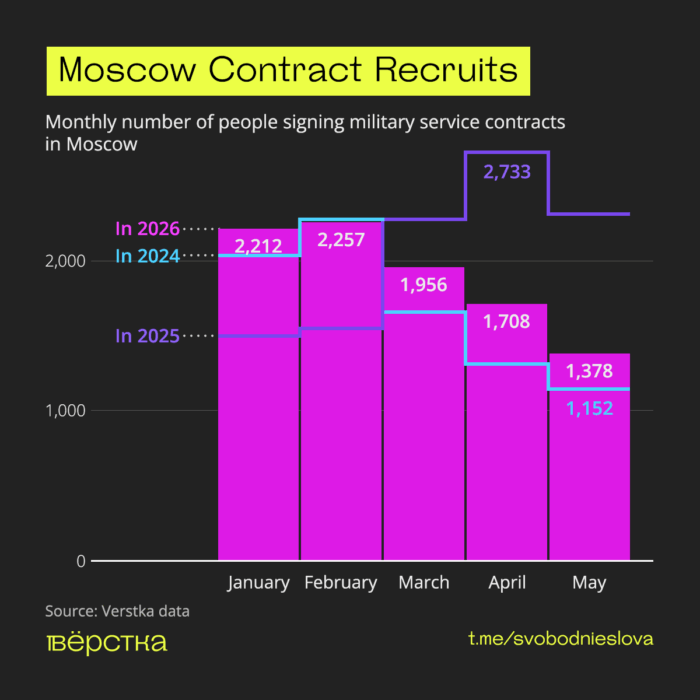
In April, Moscow sent 1,708 contract soldiers to the war; in May — 1,378. That’s a thousand fewer than last year and comparable to the figures from 2024 — when the capital had not yet introduced the one-million-ruble payments for contracts with the Ministry of Defense. In June 2026, according to a source at the Moscow City Hall cited by “Verstka,” the downward trend continues.
“Everything’s consistently shitty here; few people are coming, and even fewer are motivated. But we’re not getting the blues, because as far as I understand, our situation isn’t the worst in the country. So we’re keeping at it,” says “Verstka” source at City Hall.
It’s worth noting that at the very beginning of 2026, the influx of recruits was actually growing — against the backdrop of peace talks involving the U.S. and expectations of a ceasefire. Many applicants spoke of the motivation to “jump on the bandwagon”— to receive several million rubles before hostilities were suspended. However, by the end of February, it had become clear that a quick end to hostilities was not to be expected.
“Many people really did believe that the war would end any day now, and that this was a chance to jump on the last train and make some cash. But something went wrong,” explains a source at Moscow City Hall speaking to “Verstka.”
The situation in Moscow with the influx of contract soldiers into “Rubicon” — a UAV unit where contracts are signed for one year with no option for renewal — is even worse. When recruitment was first announced, there was a huge influx of applicants, but due to the high requirements, almost everyone was weeded out. Sources of “Verstka” were unable to provide exact figures. But according to them, those who have now signed contracts with “Rubicon” make up about a third of the total applicants.
“Regarding the UAV unit it’s clear that the requirements there are very strict. We don’t have many people like that. In fact, there are very few people like that left at all! There are a very large number of problematic candidates,” says a source at “Verstka” who oversees contract recruitment in Moscow.
The quality of recruits is also declining, as “Verstka”’s sources acknowledge. This trend began last year. As one source who works with candidates puts it, “He used to be a patriot, but now he’s taken a look at the Russian people and has become as unpatriotic as possible.”
According to sources, the situation in Moscow reflects the picture across the entire country. For example, a high-ranking source at “Verstka”, who serves in one of the military units in Siberia, said that the flow of people willing to sign a contract continues to decline.
“The decline began about two years ago, but now the numbers have hit rock bottom. No one has canceled the recruitment plan at the same time — we have to send out new recruits every month”.
This is confirmed by a source at the military commissariat in the same region. According to him, in the past, recruiters would actually travel to them because there were many people willing to fight in a large, poor and remote region far from Moscow. “ We’re now able to boost the influx mainly through cops,” he said, referring to the practice of offering detainees and suspects a contract in exchange for dropping charges and not filing a report. A source working on recruitment in the Lipetsk region echoes this.
We were unable to obtain specific figures for other regions. However, there is other data that may indirectly indicate a decline in the influx of new recruits. For example, federal budget expenditures.
Across Russia, contract recruitment in the fourth quarter of 2025 fell by half compared to the same period last year, according to calculations by “Important Stories” based on federal budget expenditure data.
Recruitment rates continued to decline in early 2026. According to Janis Klug, a research fellow at the German Institute for International and Security Affairs (SWP), 800 – 1,000 people signed contracts daily in the first quarter of this year, which is 20% lower than during the same period last year.
Problems on the Front Lines
According to military personnel interviewed by “Verstka”, the new contract soldiers who arrived in 2026 are, for the most part, “not capable of fighting”. “Just look at the crowd they’re recruiting — these are the ones who are mostly drafted, not the ones who volunteer,” one of the conscripts tells “Verstka”. “Some are taken from prison, others from the streets. Literal bums. Criminals — and at such an age and with such health problems that they can barely stand on their feet. The kind of mugs you see hanging around cheap liquor joints, people who were passed out in the streets until recently. They’re dead weight. What on earth can you teach them? Half of them can’t even walk in full gear. Carrying 20 kilos on their backs is too much for them. They’re disposable.”
“Or they recently brought in about ten foreign mercenaries [who spoke Russian poorly] — they didn’t last long on the front lines,” continues the source speaking to “Verstka.” “New contract soldiers don’t last more than a month unless they get in through connections.”
Among the surviving new recruits, half immediately flee the front lines, claims the same source from “Verstka.” As proof, he sends form for 19 AWOL solders: “These are just the ones we’ve been told about this past week. And we’re just in one tiny village near the Line of Contact [LoC]. I think there are a lot of them across the entire LoC area each week — hundreds.”
“Looks like they’ve run out of folks,” the mobilized soldier continued. “This is very noticeable in our regiment; units are at 30%, or at best 40%, strength. Certain companies (snipers, military police, air defense, security, and the armored group) are being disbanded, leaving only 15–30 men instead of 60–80. Those who are released are sent to the infantry after a three-day training exercise — and after this “training,” they’re immediately sent on an assault and to “consolidate”i. They’re sent out in pairs. A guy from my platoon lost his leg right there, just the very next day after the transfer.”
Some who signed contracts in 2026, says another soldier, managed to get wounded, be taken prisone and return to Russia during a prisoner exchange with Ukraine — and are now in a hospital near Kaliningrad awaiting deployment back to the front. “Three months was enough for everything,” adds “Verstka”s source.
“A buddy of mine had been binge drinking and stumbled into the enlistment office drunk yesterday… I’m really hoping he sobered up today and manages to get out of his contract,” one of the mobilized soldiers serving in the rear tells “Verstka” in response to a question about who signed a contract with the Ministry of Defense in 2026. — I’ve already lost another friend. He had a fight with his wife and went there [into the enlistment office ] drunk; he sobered up, tried to get out of his contract but couldn’t, and a couple of months later — 200 [died]. He left behind three children 🙁”
All of this, of course, affects the course of the fighting. Here’s how one of the contract soldiers currently deployed in the Kharkiv front describes the situation:
“We’ve been fighting for 300 square meters since around January — it’s the usual back-and-forth artillery fire, with a lot of 300s [injured] ]and 200s [killed]. This is a buffer zone, right before Kharkiv. We’re barely holding onto this territory. We’re short on everything: people, shells, drones. We’re eating animal feed. It’s all really tough,” says Anton.
“Four of our guys were taken prisoner in Kherson. They didn’t surrender to a person, but to drones,” says another contract soldier who left on leave in May. “There are so many drones that it’s impossible to approach on foot or by vehicle, so we have to lie through our teeth.”
“Truly combat-ready men,” according to a source speaking to “Verstka,” around 15–20 in an assault company, while reports claim there are 80–90 people. “Verstka” was unable to confirm this information with another source. “And under this pretext, they’re handing out completely unrealistic missions. So people basically get sent one-way with no chance of coming back. They cover up everything… Casualties, the wounded, lost territory, destroyed equipment, logistics problems… Basically, everything. It’s a total lie! They’re just grinding us up in this bizarre military operation.”
According to military analysts, the pace of Russian advances on the front lines slowed significantly in the first half of 2026. At the beginning of the year, Russian troops were still capturing new territory, albeit on a local scale, but by spring the front line had effectively stabilized in many areas. The Institute for the Study of War (ISW) reported that in March, Russian forces captured only about 23 km² — the lowest figure since the fall of 2023 — while in some areas, Ukrainian units even managed to retake previously lost positions.
The DeepState project reported that May was the month with the fewest Russian territorial gains in several years. Against this backdrop, an increasing number of analysts are characterizing the situation on the front as a phase of positional warfare, in which neither side is capable of achieving major operational breakthroughs.
Among the mobilized and experienced contract assault troops, judging by their conversations with “Verstka,” there is a sense of despondency and irritation that was not present at the beginning of 2026.
“All the guys are very tense and irritable. There have been many written refusals to participate in combat missions; they aren’t court-martialed for this, but rather transferred to other units — precisely where the special contingent is serving,” says one of the mobilized soldiers. Previously, military personnel who refused to carry out a combat mission were, as a rule, either threatened with “zeroing out” [being killed] or actually “zeroed out”; the practice of written refusals, according to sources, is new; “Verstka” does not have such documents on file.
“In general, the vast majority — to put it very mildly — have become disillusioned with our government and specific individuals,” the soldier continues. “I think you understand who I’m talking about. It’s already hatred, though not yet rage — but that’s where things are headed. Honestly, I’m afraid for the country; I foresee very sad times ahead, similar to the collapse of the USSR.”
How the authorities are finding new recruits
Problems on the front lines and difficulties recruiting new contract soldiers are forcing the authorities to desperately seek new solutions. This task falls mainly to regional administrations.
A senior officer serving in one of the military units in Siberia tells “Verstka” that they have “literally combed through every village in the area” for contract soldiers, and now the Ministry of Defense is sending military personnel to recruit people in other regions.
“There are almost no volunteers left in the city. That’s why our girls — the recruitment team — have now gone to Dagestan. And this is despite the fact that new contract soldiers are paid more.” In addition, the military is given KPIs based on the number of “off-duty” business trips for those who serve permanently in the region. “Since there’s not much we can really do to help, they’re sending our orchestra off to ‘Luganda’ now. Just so they can tick the box and report another deployment, even though who the hell needs an orchestra there? They’ve got completely different needs” the source told “Verstka.”
Some regions and government agencies are raising referral bonuses for contract recruiters to record levels. In 2026, average monthly regional spending on payments to recruiters more than doubled compared to the previous year—from 358 to 802 million rubles per month, according to calculations by “Important Stories” based on regional budget execution reports. Such bonuses can be received by ordinary citizens as well as employees of military registration and enlistment offices, local administrations, and even law enforcement officers involved in recruitment. In total, the regions have already paid recruiters at least 7.7 billion rubles.
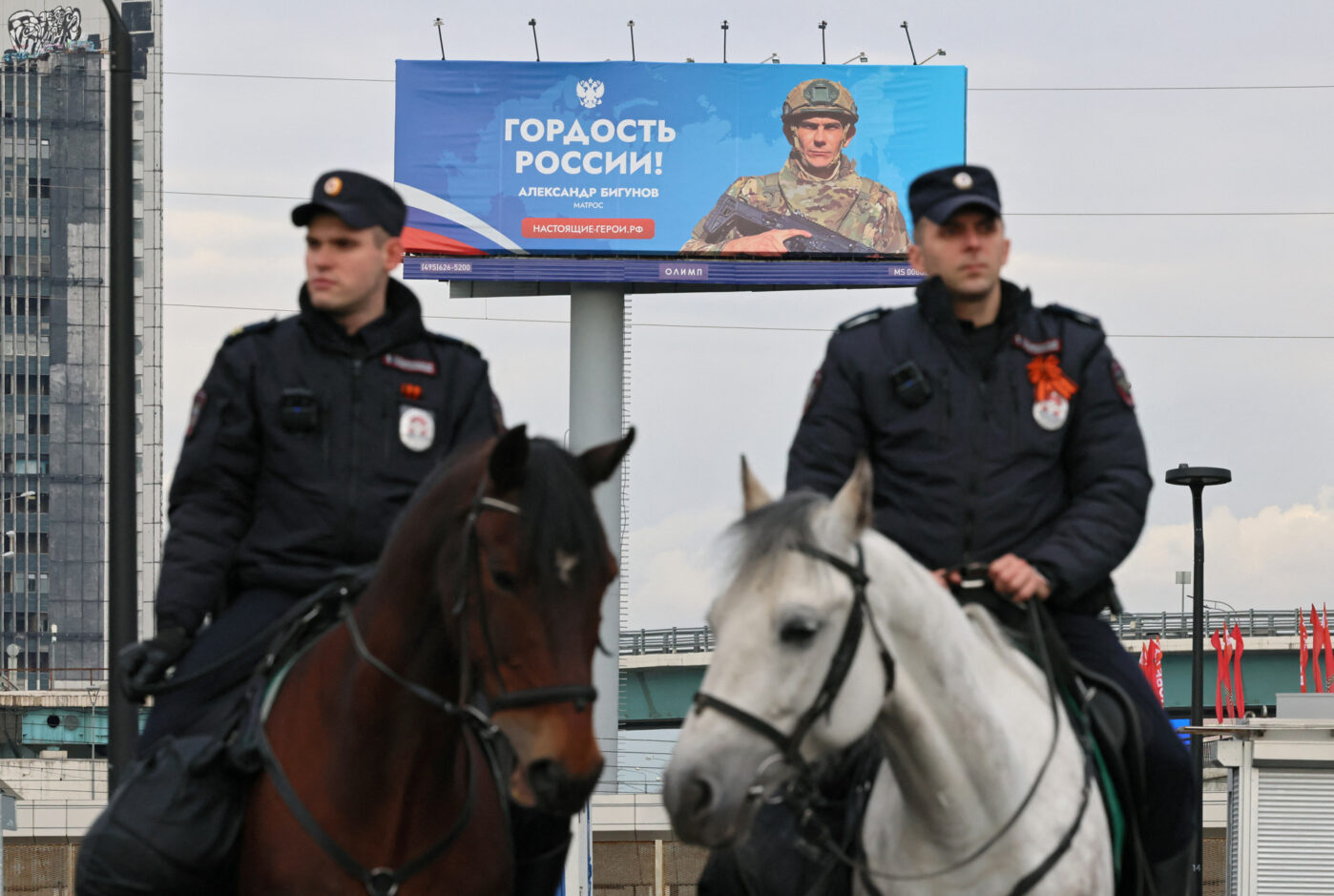
They are trying to motivate volunteers through “promotions,” offering higher pay if they sign a contract by a certain date. When the Tyumen Region raised the pay for inexperienced soldiers to 3 million rubles, the number of applications immediately doubled, boasted the region’s military commissar, Sergei Chirkov.
At the same time, Russians are literally being lured into the war under the guise of jobs behind the front lines. Candidates are offered positions as drivers, security guards, and construction workers. But in reality, men have no guarantees of such assignments — they sign contracts on general terms, and unit commanders and training centers handle the actual assignments.
Recently, advertisements for job openings “behind the lines of the special military operation” have even appeared in China and Belarus. “Verstka” discovered that such ads appeared on “Avito.” The job postings often seek people of any nationality, including those “over 45 years old,” retirees, and people “with health impairments” (fitness categories from “A” to “G,” meaning up to “temporarily unfit”) with no experience or military ID, but with a cleared criminal record or a suspended sentence.
“No deployments to ‘hot spots’ or the front lines of combat. Why Belarus? A stable situation, developed infrastructure, and proximity to home for many citizens. Service takes place on the territory of the Union State with all guarantees and payments from the Russian Ministry of Defense,” — the recruiters note.
The ads offer 10 million rubles in “signing bonuses” of unclear origin, debt forgiveness of up to 10 million rubles and benefits for the family. They also promise full reimbursement of travel expenses to the duty station, accommodation in dormitories or barracks, as well as meals and equipment.
Exactly the same conditions are listed in an ad seeking an “ammunition production worker” in China. The workplace is described as a “quiet rear area” with developed infrastructure and under guard.
Another attempt by recruiters to attract more contract soldiers for the Ministry of Defense is to advertise a job opening for a “peacekeeper.”
No such position exists in the armed forces, but in 2026, ads appeared on the same “Avito” platform recruiting “peacekeepers” for the combat zone in Ukraine.
Employers with accounts such as “We Are Where We’re Needed,” “Contract with the Ministry of Defense,” “Government,” and others are offering jobs “behind the front lines,” “in the special military operation zone,” as well as in the occupied regions of Ukraine — the Donetsk, Luhansk, and Kherson regions. The descriptions of some job postings explicitly state that the position involves signing a contract with the Ministry of Defense. In others, the work is described as “assisting the civilian population,” “maintaining public order,” “patrolling in safe zones,” and “without participation in combat operations.”
A “Verstka” correspondent, posing as a job seeker, contacted one of the recruiters.
The man, who introduced himself as Denis, was not immediately able to explain exactly what a “peacekeeper” would be doing. At first, he said he could offer “absolutely everything involved in the special military operation,” several thousand positions — “from clerk to laborer.” But then he did explain the details.
“This is a person who has come in peace to help people, not to go to the front lines, but to do various kinds of work — digging, unloading, building dugouts, working as a storekeeper — something related to peacekeeping. It doesn’t necessarily involve killing, trenches, or assault rifles,” said the recruiter.
As “Verstka” previously reported, those who sign such contracts are often transferred to assault brigades within the first months or even weeks of service.
Will Russia Announce Another Mobilization?
Among the options for addressing the shortage of contract soldiers, the authorities are discussing more radical measures, including a new wave of mobilization. Eight sources working with the Presidential Administration, as well as contacts in military enlistment offices and a source close to the FSB, told “Verstka” and “Important Stories” about the rumors and possible preparations for this.
The sources had heard about a possible mobilization in the autumn of 2026, potentially in October after the elections, but emphasized that “no decision has been made on this matter.”
“The reason, in my view, is that things aren’t going quite as planned. And the people involved in the process have started getting creative,” explains a source close to the Kremlin’s domestic policy bloc within the Presidential Administration. “It’s not clear what mobilization would fundamentally change, other than sparking protest and wrecking the economy,” he adds.
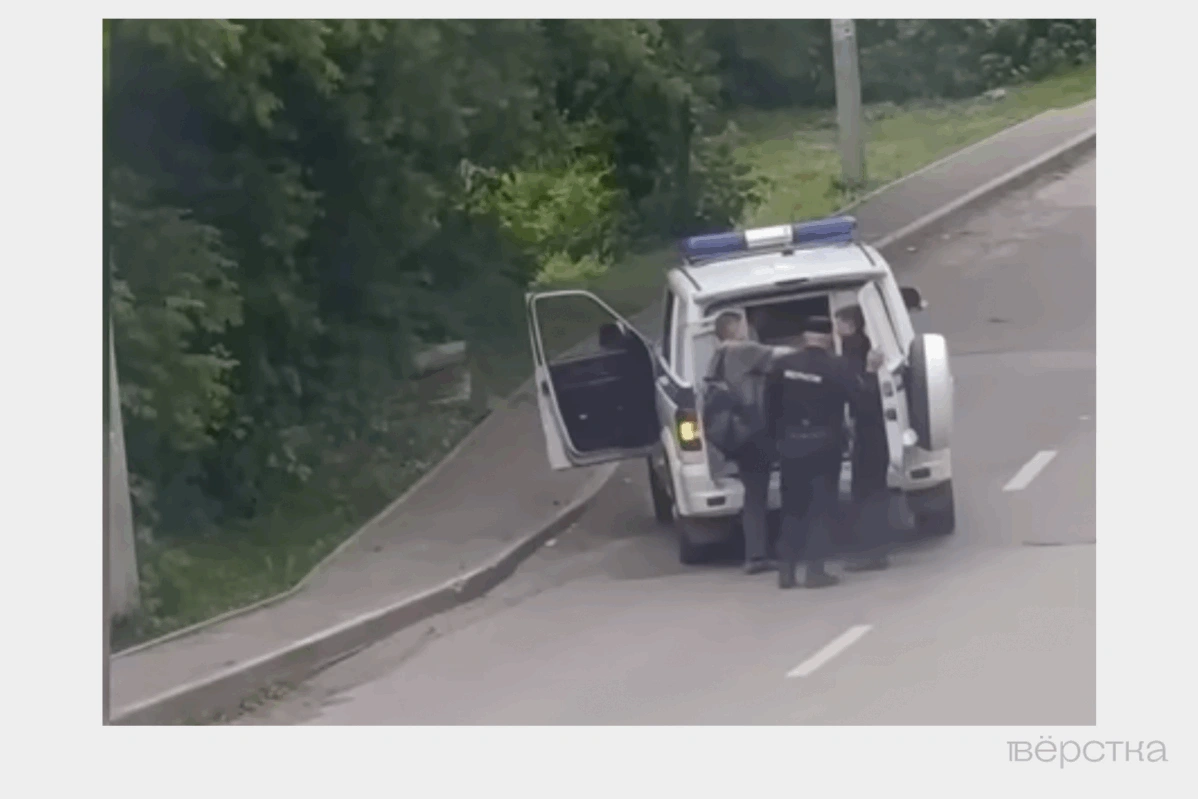
Another colleague of his confirms that he has heard about various “types of roadmaps for bolstering the army,” in which mobilization is one of the scenarios. “But it’s all just rumors. There’s a lot of talk about it — supposedly, something could already start in October,” he adds.
Another source working for the Kremlin has also heard that such a decision is being discussed, but “there’s a sense of indecision.” “There was no political groundwork laid in the spring, but there are plenty of reasons for this decision: the failure of the offensive, the loss of the initiative, and the impotence of the air defense,” he says.
A source within “United Russia” doubts that they will actually go ahead with mobilization: “The situation on the front lines is dire, but the risks of mobilization are obvious. I don’t believe this decision will happen.”
Two other sources in the leadership of two major Russian regions told “Verstka” that they consider a possible mobilization to be mere rumors. “In our region, everything is in order with conscription. I think these are pre-election rumors spread by Western opponents — they want to scare the people ahead of the State Duma elections,” suggested a source in the leadership of a Russian region.
A source close to one of the European intelligence services told “Verstka” that he considers mobilization in Russia to be one of a number of “hypothetical drastic measures.”
“Putin doesn’t want to end the war and is ready to fight for another two or three years. There are fears of instability — if hostilities were to end now, as things stand, without any significant successes. Harsh measures, mobilization and a war economy are being worked out. The military allegedly guarantees him full control over four Ukrainian regions, provided there are sufficient human resources.”
Details of a possible mobilization are provided by a source who oversees contract recruitment at one of Russia’s state-owned corporations. According to him, preparatory measures “for something they will never call a mobilization” have been underway “for several months now,” and “they are trying to take into account the mistakes of the 2022 mobilization.”
The source asserts that “starting in October,” the military will be ready to accept tens of thousands of people for accelerated training at military training grounds and, in such batches, “deploy them to active units.” He did not specify the exact number of new fighters needed at the front, from the perspective of the military and the Kremlin, but reported that “the front lines are constantly complaining about a severe shortage of personnel.” “We’ll have to hurry to meet these needs,” he clarified. When asked whether the decision on a new military draft was final, the source speaking to “Verstka” was unable to answer: “Our task is to prepare.” “Verstka” was unable to obtain any other confirmation of his statements.
The source, who works on media relations for the presidential administration, mentions a more measured approach to replenishing the troops—the rotation of reservistsi.
“There are discussions about rotating reservists who are currently involved in rear support; these are people without specialized training. Some of them may be transferred to active units, while the reserve will be replenished with new recruits,” the source explained. Thus, some of those mobilized may be returned to the rear and replaced by reservists—or demobilized altogether. The source did not specify exactly how the reserve would be replenished in this case.
Another source working in the Central Federal District’s regional administration reported that “there will be no emergency draft.” “The situation on the front lines isn’t such that, as in 2022, we need just anyone with a rifle to plug a gap. People like that wouldn’t survive even a few minutes there now. Recruits need training and at least some basic skills and knowledge. You can’t lure people like that with a carrot, so — you get the picture,” he sighs.
One of the conscripts who spoke with “Verstka” disagrees. He’s convinced there will be a second wave of mobilization. “Logically speaking, there should be a mobilization, and I’m sure there will be one after the September sham elections. But there’s another, less realistic option: that they’ll reach some kind of agreement after all.
“We don’t have enough people here — we’ve run out of fools willing to do this for money,” says the soldier. “So it’s either mobilization or a backroom deal that would mean losing ‘face,’ along with unfulfilled conditions and objectives of the special military operation. I think the choice here is obvious, isn’t it?”
Cover: Dmitry Osinnikov
You can support “Verstka” from anywhere in the world — it’s safe, and it matters more than ever. We really need your support right now.